Enhancing the value of existing wastewater treatment assets is a major theme of the AMP6 spending round and major utilities companies are also taking the opportunity to look closely at their approach to operation and maintenance programmes.
Privatisation and the demands of the European Water Framework Directive have driven a capital-investment focus in the water industry for many years. Now as water companies are re-assessing their treatment plant performance for the next AMP, equipment installed pre-2000 still treats our sewage. The asset value tied up in older equipment and installations, long-established processes and operating experience, still has a great value.
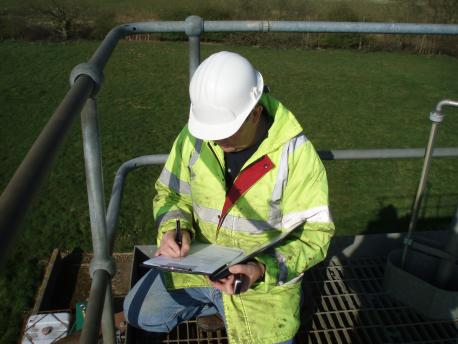
Enhancing the value of existing water treatment assets
While newer methods and high performance technologies may be needed to meet tougher environmental water quality requirements, replace ageing plant or supporting the development of newer processes such as methane production, it’s simply not affordable to replace all equipment, even were that timely, possible or desirable.
Asset Management Approaches
Increasingly, water companies will need to consider how to make better and full use of the assets they have, with a view to increasing their effectiveness with reduced through-life costs.
Neil Hobbs, Service and Warranty Manager for Hydro International’s UK Wastewater Division Spares and Service Team, explains:
“The trouble has been that many treatment processes based on simple and robust equipment can continue for long periods at deteriorating or relatively low efficiency with minimal maintenance regimes in place.
“When money for personnel and time is constrained, it is easy to continue with a strategy of ‘If it ain’t broke – don’t fix it.’ If this occurs in tertiary treatment, for example, it might take a heavy fine for above limit discharge quality to sound a wake-up call.
Ideally, with planned maintenance being seen as two to three times more cost effective for customers, Ofwat is looking to reduce reactive approaches and move to greater emphasis on planned or predictive maintenance.
“A key strategy is to move towards more of a planned and preventative maintenance programme, which surprisingly is not always adopted as a matter of course by treatment plant operators.”
Planned Maintenance
To begin with, a detailed appraisal should be carried out, looking at exactly how the current plant performs, what the current costs of maintenance are and where the hot spots lie. By comparing what the equipment does with what it’s supposed to do, a greater understanding of relative risk ensues and less essential tasks can be classified accurately.
Once this platform is established, a clear assessment can be made of which tasks could be better performed by a Planned Predictive Maintenance (PPM) approach. However, the approach is not an overnight fix, and the reactive demands do not vanish. The time to instigate a PPM regime will vary.
One way of proceeding from the old reactive to the new reliability-centred approach with PPM is to introduce third-party planned maintenance contracts on key equipment. This will start to free in-house personnel for the key overseeing and management tasks, rather than having them tied down by reaction to emergency situations.
Operating Efficiency
Southern Water is one water company adopting this strategy and has recently upgraded its provision for the service and planned maintenance of more than 60 Hydro SludgeScreen™ units installed at more than 30 sites around the region.
Southern Water has outsourced the service requirements of sludge screening and screenings de-watering units, to Hydro since 2008. Now a new five-year contract has been agreed.
Bob Phillips, Principal Legislation Officer (Assets) for Southern Water explains: “We are convinced of the benefits of planned maintenance agreements. They are critical to our operating efficiency. Service and planned maintenance schedules build certainty into waste treatment plant operation with the consistency of known operational costs. It means there are no surprise equipment failures leading to costly emergency downtime and the need to tanker to other plants.
“In line with current strategy decisions, especially with reference to AMP6, we must protect and make best use of the assets of Southern Water. By assets we mean both the equipment to be operated efficiently at the lowest possible lifetime costs and the skills of our operatives that should also be used as effectively as possible.”
The Southern Water Assets Team conducted a review of in-house maintenance procedures and the services provided by Hydro’s specialist Service Division and they worked together to implement key improvements and streamline maintenance efficiency based on key performance data and to target common root causes for failure. A thorough review identified further operating efficiencies. In particular, an ongoing review structure was developed to increase the flexibility to respond to any need to change procedures during the service period. The opportunity has been taken to include environmental checks to deliver customer improvement such as reduction of nuisance odours.
“Working with Hydro, we were able to agree a plan which considered the total tasks, the scheduled maintenance visits and how critical procedures should be divided between the in-house team and Hydro’s service provision. The maintenance provided under the contract has been fully integrated with the important maintenance completed by Southern Water’s own staff. This provides a total care package that takes advantage of the available skilled resources to deliver efficiencies.
Other water companies have pursued similar strategies, with excellent benefits. Typically, a number of third party contractors are engaged by central contracts function, managed at headquarters in liaison with the individual site managers, who are the asset owners. This central management achieves a consistency of PPM performance across all sites, both facilitating comparison between sites and minimising the variation where site mangers have different ideas about third party and direct labour force use.
Wastewater Service Agreements
In planning maintenance through a third party specialist contractor, it is important to draw up the detailed schedule as a two way partnership. Significant advantages of this approach include ensuring that allocated tasks are not duplicated but, instead, dovetail to improve efficiency and even eliminate missing out essential requirements.
For example, weekly inspection, lubrication, gland-tightening or similar low intensity and rapid routines can easily be carried out by non-specialist site staff who also provide low level, frequent inspection on a wide range of equipment.
This saves budget for more specialist maintenance tasks at less frequent intervals, such as stopping a machine to inspect for bearing wear and for planned downtime for full strip-down and routine replacements of consumable parts such as gland packings.
These functions can usually be carried out by experienced contractor operatives with greater speed and efficiency than the generalist treatment plant staff. The experience of contractor personnel allows better predictions about the life of the equipment they are servicing.
Maintenance Staff Training
Training of a water company’s own maintenance staff by the expert contractor adds more value to the contract. For instance, Hydro has designed a half-day training session to introduce best practice techniques for optimising the performance of key equipment and reporting any problems.
For example, Hydro developed a bespoke training package for Severn Trent Water and trained 98 operators over a three month period to build their knowledge of DynaSand® filters. After the training the operator feedback suggested those with a ‘good’ level of knowledge had increased from 22% to 74%.
Severn Trent Water has in excess of 100 DynaSand® filters from Hydro International operating across 31 sites in the West Midlands. Some have been in operation for more than 25 years.
Severn Trent Water has operated a Service Contract with Hydro International for its DynaSand® units for nine years and approached Hydro to conduct the training as part of requirements for major reorganisation of their WWT site operations according to catchment.
Neil Hobbs, Service and Warranty Manager for Hydro International’s UK Wastewater Division Spares and Service Team, concludes: “Hydro has a strong and productive working relationship with several utility companies. Renewal of service and spares contracts demonstrates water companies’ endorsement both of our equipment and of the through-life value we add to their business.”