Many people wonder how well reed beds or treatment wetlands perform during winter and in cold climates. These systems are influenced by local weather, especially temperature. Despite this, they work successfully worldwide, even in the northern United States and Canada, where temperatures can stay below freezing for long periods.
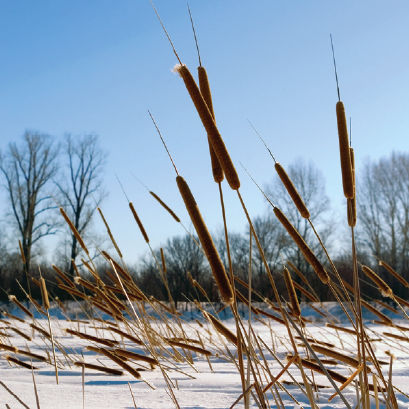
It's a common belief that plant growth is necessary for treatment and that plants dying off in winter hurts performance. However, treatment relies on bacterial activity. These systems act like microbial reactors. By using below-ground systems and insulating materials like mulch or reed litter, over 50 wetlands in North America function year-round with consistent performance. Their success comes from maintaining a stable environment for bacteria and designing wetlands to handle slower bacterial activity in cold water.
Energy balance
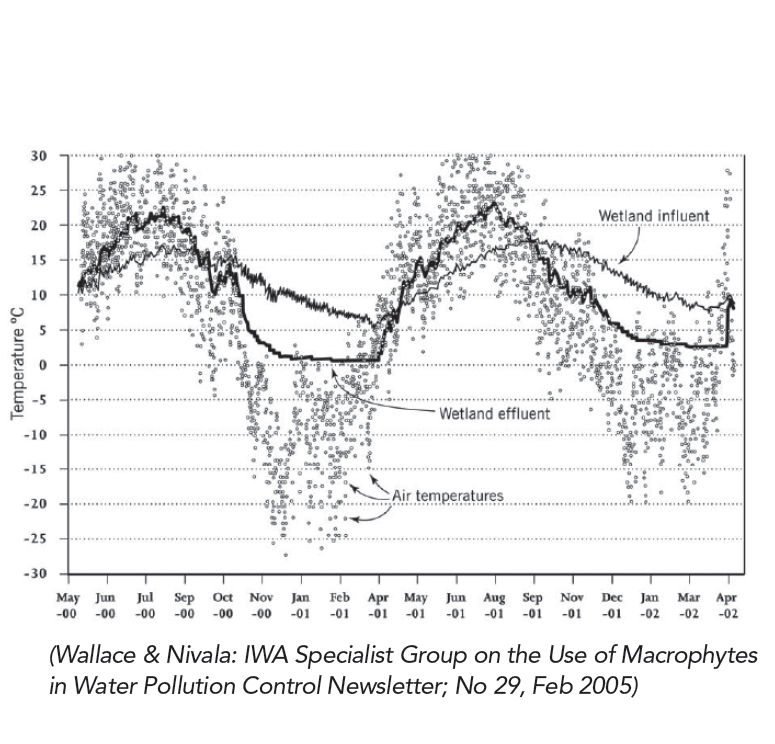
The temperature of a wetland treatment system is mainly controlled by the temperature of the water within it. Water temperatures in reed beds stabilize quickly, reaching a balance where energy inputs and outputs are even. In warmer months, this balance is close to the average air temperature. In colder months, system design and management help maintain performance according to local climate conditions.
Mitigation techniques
· Surface Flow Systems
In these systems, ice and snow act as insulating layers. By raising the water level to let it freeze and then lowering it, an insulating air gap is created between the ice layer and the water.
· Subsurface Flow Systems
Here, reed litter or additional materials like peat or mulch are used for insulation. These methods help maintain water temperatures a few degrees above freezing, allowing key treatment processes to continue even in severe weather.
General points
When designing a wetland system, local climate conditions are carefully reviewed. Heat balance calculations help determine the necessary insulation, such as mulch, water depth, or covers. The civil components of the system are also reviewed for frost protection, just like any other construction project.