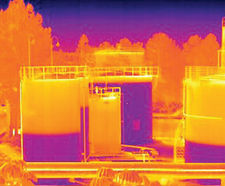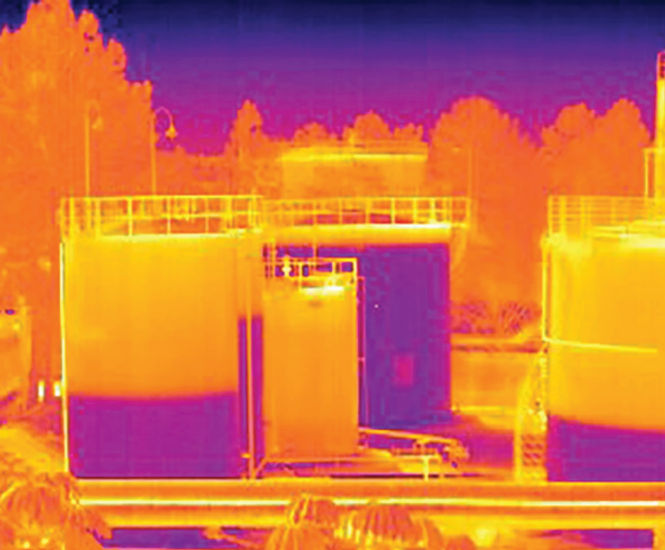



Tanks used in the oil & gas, biomass, and water industries are exposed to corrosion, mechanical stress, and environmental damage. Early detection of defects is key to preventing leaks, structural failures, and regulatory issues.
Oil & Gas – Inspect storage tanks, pressure vessels, and pipelines for corrosion, cracks, and integrity failures.
Biomass – Monitor biogas digesters and process tanks to prevent gas leaks and structural degradation.
Water Industry – Assess Water storage tanks, wastewater treatment tanks, and chemical storage units for early signs of deterioration.
We use Pulsed Eddy Current Testing (PEC), Ultrasonic Testing (UT), Sonar, and robotic crawlers to detect internal and external defects—even in hard-to-reach areas. Whether you need equipment hire, on-site surveys, or expert training, we can help.
Inspectahire has many years of experience in carrying out storage tank inspections in accordance with EEMUA 159 guidelines, and offers clients a fully integrated service for inspections of atmospheric and low-pressure storage tanks.
As well as visual inspections, the company provides a range of traditional and advanced NDT inspection services on both in-service and out-of-service assets to assess the condition and mechanical integrity of storage tanks.
Methods of inspection
Magnetic particle inspection (MPI): used for the inspection of the shell to bottom weld and seam welds.
Dye penetrate: used for the inspection of the shell to bottom weld and seam welds.
Magnetic fux leakage: used to assess the condition of the tank floor and locate defects on underside of floor plates.
Pulsed eddy current (PEC): used to measure wall thickness and to assess the condition of the annular ring.
Vacuum box: used to test the integrity of the shell / bottom weld and majority of seam welds.
CCTV and pneumatic mast: used for the inspection of drains, pipes and areas where access is most difficult negating the use of scaffolding where access is at height.
Ultrasonic and remote ultrasonic: remote ultrasonic to measure the wall thickness of the shell strakes and tank roof plates by following vertical scan lines on the tank shell from the ground.
Visual: overall inspection of foundations, holding bolts.
Unmanned aerial vehicles (UAVs): internal and external visual, thermal and hydrocarbon leak surveys of tanks and infrastructure.
FLIR: thermal and optical gas imaging (OGI) surveys of the storage tank and Infrastructure.