The precise quantification of flow velocities in streams, small rivers and artificial channels forms the basis for sound hydrological analysis and water management planning. Particularly in the context of climate change and the associated increase in low-water events, the measurement of low flows is increasingly becoming a focal point. While high flow velocities can generally be recorded without issue using conventional methods, the range of boundary flows presents significant physical challenges for measurement technology.
The limitations of mechanical systems
In natural bodies of water with low gradients or in channels with controlled discharge, the kinetic energy of the water often drops so low that classic mechanical measurement procedures reach their systemic limits. Conventional current meters based on propeller rotation suffer from unavoidable startup resistance. Mechanical friction in the bearings prevents rotation until a certain minimum velocity is reached. Consequently, measurements in the lower range are either not captured at all or are heavily distorted by inertia effects. Furthermore, mechanical systems are prone to blockages in weed-choked or sediment-rich waters, jeopardising the reliability of data series during critical measurement periods.
Advanced measurement principles
To close these methodological gaps, modern physical measurement principles are employed that function without moving parts. The principle of electromagnetic induction has proven particularly efficient. It utilises the properties of water as an electrical conductor which, when flowing through an artificially generated magnetic field, induces an electrical voltage. This voltage is directly proportional to the flow velocity, enabling high-precision detection of even the most minimal water movements.
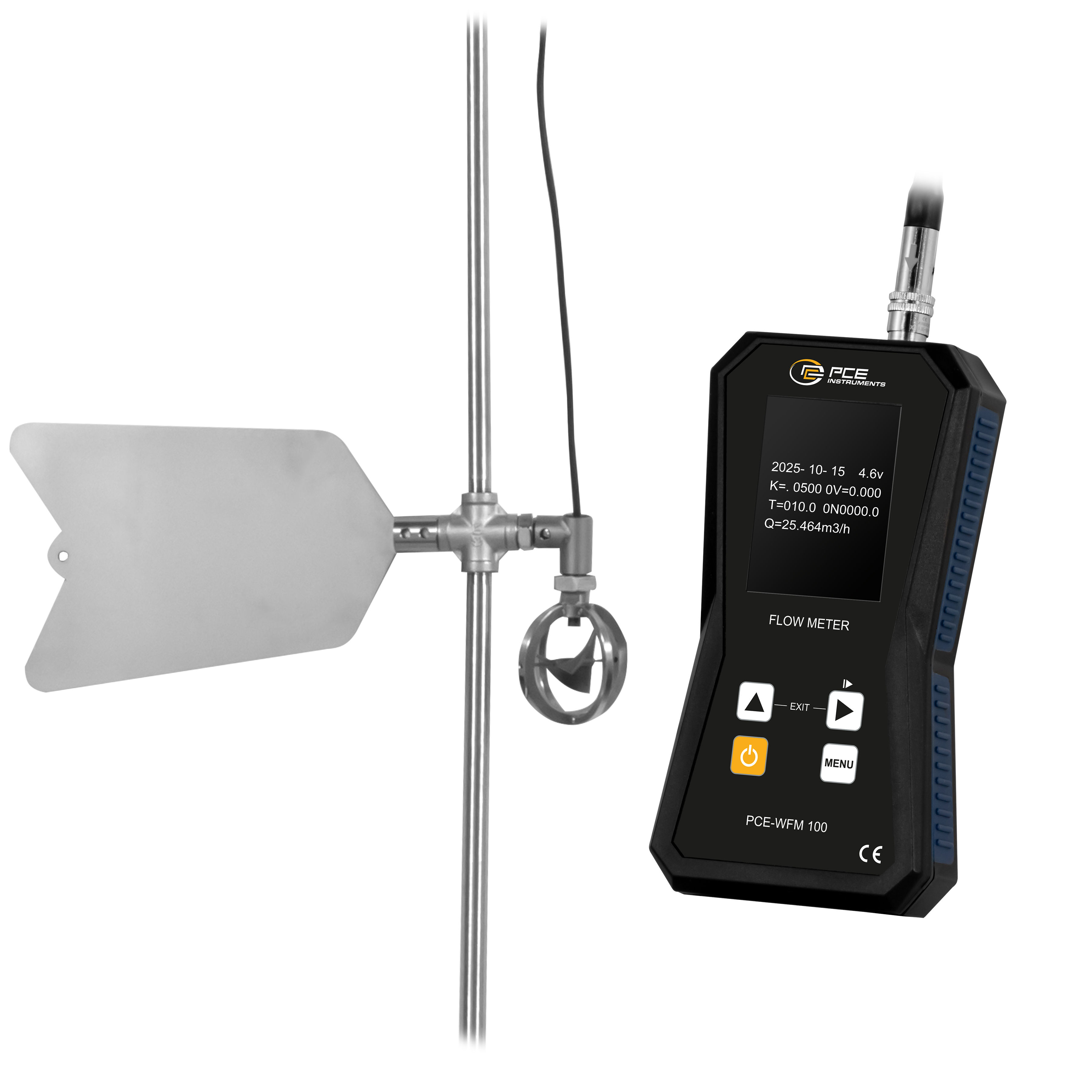
Water Flow Meter PCE-WFM 100
Practical application: the PCE-WFM 100
In this technological landscape, the PCE-WFM 100 flow meter represents an optimal solution for daily field operations. By consistently utilising the electromagnetic measurement method, the system completely eliminates the weaknesses of mechanical probes. Since the device does not have to overcome startup resistance, it provides valid results at velocities as low as one centimetre per second. This is of decisive importance in shallow streams or when monitoring minimum water flows downstream of weirs, where conventional technology fails to deliver usable data.
The PCE-WFM 100 excels through its robustness against external interference. As the sensor has no rotating parts, it is immune to algae growth or the entanglement of organic material - common obstacles in small channels and near-natural streams. Its compact design also allows for measurements in extremely shallow water depths where acoustic Doppler methods often reach their limits. Overall, the use of this measurement system leads to a significant increase in data quality for low-flow measurements and provides the user with a legally sound basis for the ecological and infrastructural assessment of watercourses.
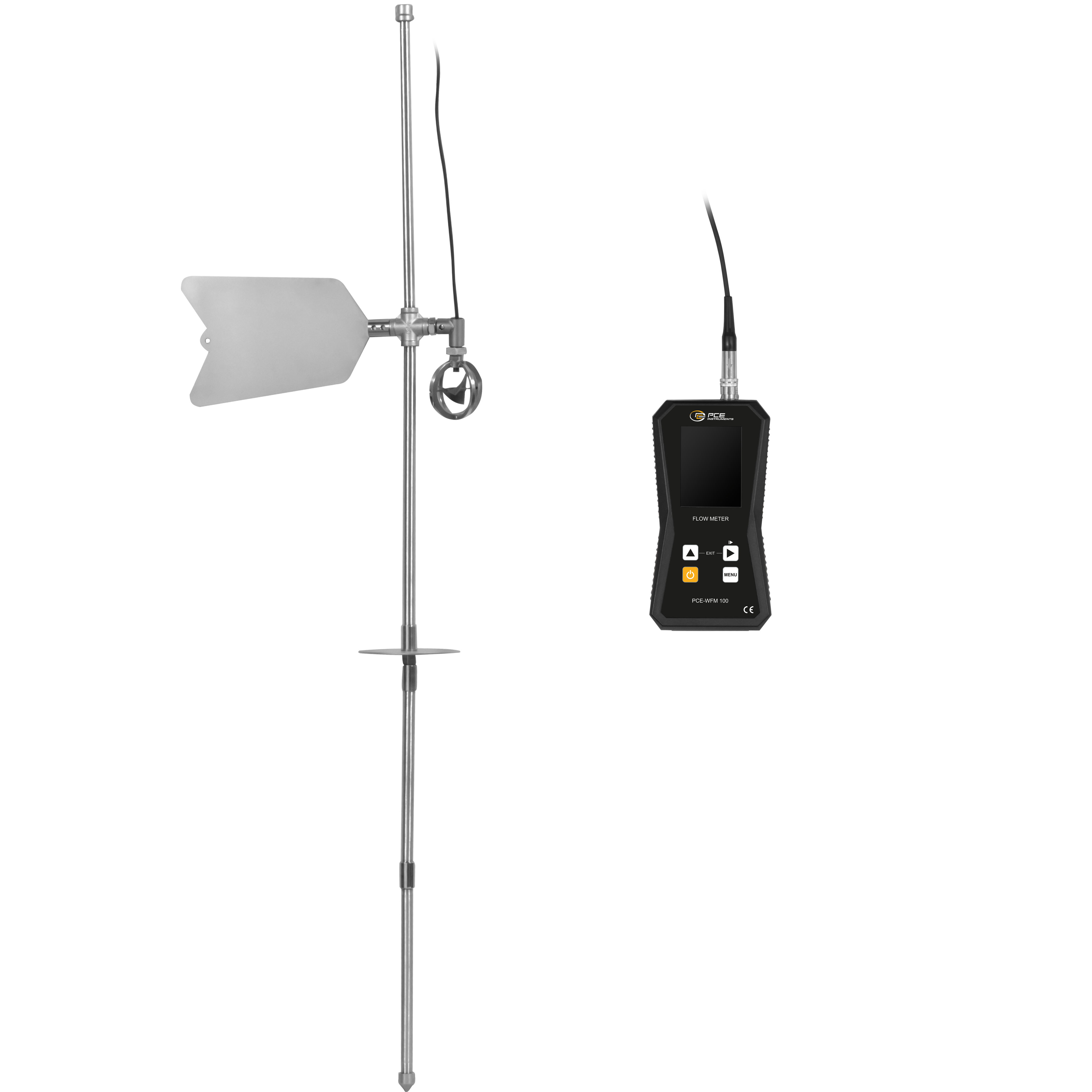
Water Velocity Meter PCE-WFM 100