

- Project type
- Refurbishment
- Services provided
- Design
- Year completed
- 2007
- Client
- Meriden Wastewater Treatment Plant
- Consultant
- AECOM
- Contractor
- AECOM
- Products used
- ABS turbocompressors HST 40
Challenge
Located in New Haven County, Connecticut, in eastern USA, the wastewater treatment plant in Meriden has a design inlet flow of 43,911 m3/day (11.6 mgd) with a maximum inlet flow of 143,386 m3/day (38.0 mgd). Upgraded in the 1960s and 1980s, the plant has been in existence since the 1800s.
In 2007, the plant initiated a series of major upgrades that had been approved to address its 20-year growth. Among them were a fourth 1st-stage sediment basin, a fourth 1st-stage reactor and new, more efficient blowers to upgrade the aeration system.
Solution
The turbocompressor advantage:
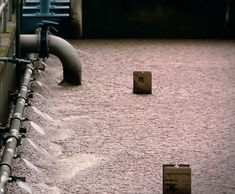
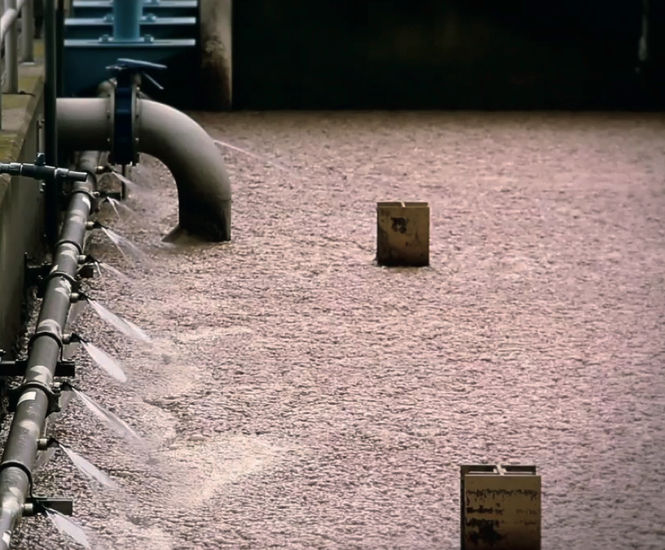
Upgrading the aeration system was a major key to reducing the Meriden plant’s energy costs. Conventional aerators consume up to 80% of the energy used by a wastewater treatment plant, and the rotary displacement blowers already in use were far from energy efficient.
Working with the engineering firm AECOM, the plant identified potential in the ABS turbocompressor HST 40 from Sulzer Pumps. Based on an estimated 20-year lifetime, life-cycle analysis of the turbocompressor showed that it would save more than USD 1,000,000.
For the upgrade, two ABS turbocompressors HST 40 were selected. One was installed for non-stop operation, while the other was installed for use as a backup. In addition, the plant installed one smaller unit, an ABS turbocompressor HST 2500. Since they began operating, the Meriden plant has noticed major differences.
Outcome
Quieter, cheaper and more productive:
Whereas the old positive displacement blowers were noisy, the ABS turbocompressors HST are practically silent. This is a result of their gearless construction and high-precision magnetic bearing system, which eliminates contact and friction between parts. These features also eliminate a good deal of maintenance, leaving only an annual air filter change and replacement of the cooling fan every 56 years if needed.
The turbocompressors spin much faster then conventional aerators, operating in the 30,000 rpm range for greater energy efficiency. In addition, they employ a variable speed drive, which means they can be sped up or slowed down to match the precise airflow needed. Working in this way has allowed the Meriden plant to increase aeration activity by 25% – while using 20% less electricity than before.
In fact, the turbocompressors have proven even more economical than anticipated. With the plant’s combined savings in maintenance and energy consumption, the investment in the ABS turbocompressor HSTs was paid back in just six months.
Key benefits:
- Near silent operation
- Maintenance reduced to little more than an annual filter change
- Output increased by 25% while using 20% less electricity
- Investment payback in just six months
“With our HSTs online, we actually increased aeration activity by some 25%. But we’re using 20% less electricity. That’s right: More aeration...that costs less!” Frank Russo, Plant Manager and Chief Operator, Meriden Wastewater Treatment Plant.