


- Sector
- Utilities
- Project type
- New build
- Services provided
- Design
- Project location
- Scotland
- Client
- Glasgow City Council
- Consultant
- Halcrow
- Contractor
- Carillion
- Products used
- Hydro-Brake® Flow Control devices
Challenge
Normally, a shallow, fast-flowing river, White Cart Water near Glasgow is prone to flash-flooding and water levels can rise by 6m after only 12 hours of rain. Since 1908 it has inflicted more than 20 serious floods on homes and other properties in the city's south side.
Glasgow City Council’s £53 million White Cart Water Flood Prevention scheme has been designed to protect 1,750 properties in the south of the city from this flooding risk.
Solution
Scotland’s largest confirmed flood prevention scheme has been designed by consulting engineers Halcrow on behalf of Glasgow City Council. The world’s largest ever Hydro-Brake® Flow Control devices have been installed as part of the scheme.
New manufacturing and installation techniques were pioneered to construct the 8m long, 6m high, cone-shaped Hydro-Brake® Flow Controls, positioned by the scheme’s main contractor Carillion in dams at Blackhouse and Kittoch.
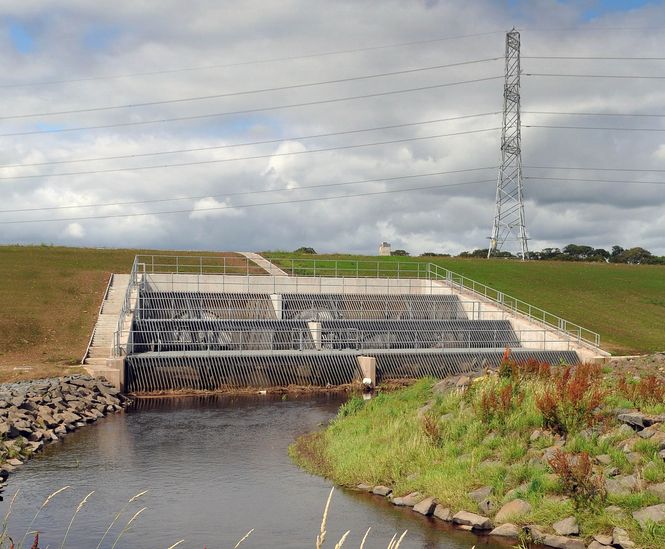
Carillion is responsible for constructing three flood storage areas on agricultural land in the hills upstream from Glasgow, which together have the capability to hold back more than 571 million gallons of flood water. Carillion positioned three Hydro-Brake® Flow Controls in the third dam at Kirkland Bridge. With a combined stainless steel weight of more than 60 tonnes, all five are the biggest ever produced.
Outcome
During peak storms, the Hydro-Brake® Flow Controls will hold back the White Cart Water and its tributaries Earn Water and Kittoch Water causing the storage areas to flood. Water will be released downstream at a controlled rate so that it does not overspill new flood defences being constructed in the city.
Upstream, a total of 90,000m2 of rich and diverse wetland habitats will be created. Downstream, the flow of water will be reduced by up to 45% during peak storms, achieving flood protection to a 1 in 200 year standard or a 0.5% probability of a flood occurring in any one year, when combined with the new flood defences.