

- Sector
- Utilities
- Services provided
- Design
- Project management
- Construction
- Installation
- Commissioning
- Year completed
- 2018
- Project location
- West Midlands
- Products used
- Aerated reed bed system with Forced Bed Aeration (FBA™)
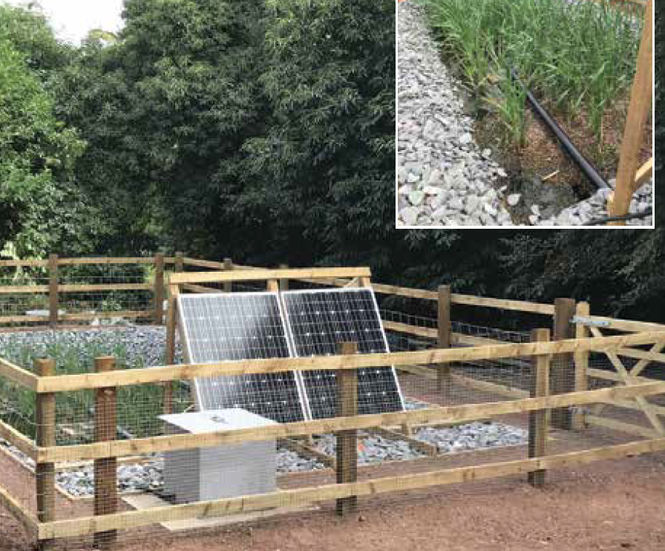
ARM designed and built an aerated reed bed system using Forced Bed Aeration (FBA™) for a small community in Lichfield.
The system treats wastewater from five homes on Claypit Lane, along with wash water from local stables and surface runoff. Previously, this combined effluent flowed through a small, poorly constructed filter bed into a nearby watercourse. ARM's assessment revealed that the old filter bed was too small, prone to leaks, and offered little pollutant removal, leading to sewage fungus at the outfall and potential contamination of surrounding soils and groundwater.
The site needed an affordable treatment solution with a small footprint and low maintenance requirements to protect the nearby watercourse, soil, and groundwater from pollution.
After assessing the existing system, ARM analyzed the wastewater and designed a new reed bed treatment system capable of handling up to 56m³ per day. The system was tailored to reduce pollutants such as biochemical oxygen demand (BOD), ammoniacal nitrogen (NH4-N), and total suspended solids (TSS) to meet UK discharge standards.
The old filter was removed, and a new saturated vertical flow reed bed with Forced Bed Aeration (FBA™) was installed. A small blower, powered by the mains and supplemented by solar panels in summer, was added to increase oxygen levels and reduce the system's footprint.
ARM delivered a sustainable, cost-effective solution with:
A visually appealing green technology
Low power and maintenance requirements
Partial solar power operation
Consistently high-quality effluent
Effective treatment of variable loadings
A compact design
Compliance with the new ST regulations from January 2020