
- Project type
- Refurbishment
- Services provided
- Design
- Project management
- Construction
- Installation
- Year completed
- 2020
- Project location
- East of England
- Contract value (£)
- 10,000
- Client
- Great Yarmouth Borough Council
- Products used
- Bespoke water aerators
Requirement
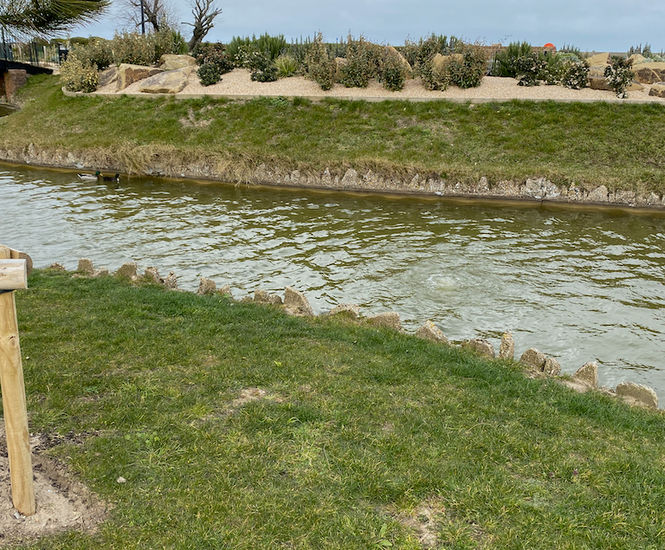
Heathland Group was contacted by Great Yarmouth Borough Council with a request to design and install a bespoke diffused aerator system in the newly renovated Venetian Waterways in Great Yarmouth, Norfolk to provide aeration for the waterway.
Solution
For this aeration project, the Heathland Group design team determined that the best route to ensure that the entire waterbody received maximum levels of aeration would be to install a 24 single-disc AirPro diffuser system throughout the entire waterway. The compressor enclosure for the diffused aeration system was installed by the main boating area allowing the team to run over 1000m of underground airline around the bank of the waterways, limiting the amount of weighted pipeline required.Installation of the bespoke diffused aerator system
The team installed the underground airline around the bank to the different areas in which the diffusers would be situated. This allowed them to then connect the weighted airline at the closest position possible to the diffusers. The 24 single-disc diffusers were distributed and installed within the waterways in the appropriate positions to ensure the entire waterbody received high levels of aeration to increase the dissolved oxygen level and improve the ecological balance within the Venetian Waterways.
The team chose a diffused aeration system rather than a surface aeration system due to the number of twists and narrow canals the Venetian Waterways incorporates. A waterbody like this would have minimal wind disturbance and dead spots throughout where there would be virtually no water movement.
Outcome
Diffused aerations systems mix the water column from the bed of the waterbody to the surface. This eliminates the effects of thermal stratification where the warmer oxygen-rich water on the surface is separated from the cooler oxygen-deficient layer on the bottom by a layer called the thermocline. The density difference of the thermocline stops the two layers from mixing. By aerating from the waterbed to the surface, the diffused aeration system breaks up these layers and allows any noxious gases that may be trapped on the lower layer to be released. The movement of the water on the surface also increases the surface area of the waterbody allowing for higher levels of natural aeration to occur.