

Phosphorus removal from wastewater to prevent eutrophication (overuse of the water’s oxygen by increased demand from plants and organisms, which can kill aquatic life) has been challenging for wastewater treatment engineers. Traditionally, water companies use chemical dosing with ferric to remove phosphorus through the co-precipitation and settlement of iron salts. However, stricter regulations require a solution that does not rely on power, fresh water or chemicals, and doesn’t generate sludge; ARM created ARMPhos© in response.
Wetland engineers experimented with specialised materials, designed to remove phosphorus (also known as reactive media) including iron, aluminium and calcium. Apatite proved to have the highest phosphorus reduction capacity in ARM’s research. ARMPhos© media is graded to balance finer and larger particles, providing excellent phosphorus removal and good hydraulic loading capacity.
The removal mechanisms form more apatite through the complexing of calcium and phosphorus and crystallisation.
Refurbishment is based on permeability reduction with media expected to last 8-12 years or longer, depending on the site. The used media can be processed for resale or reuse.
How it works
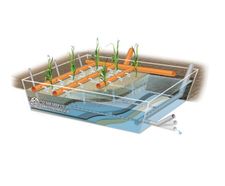
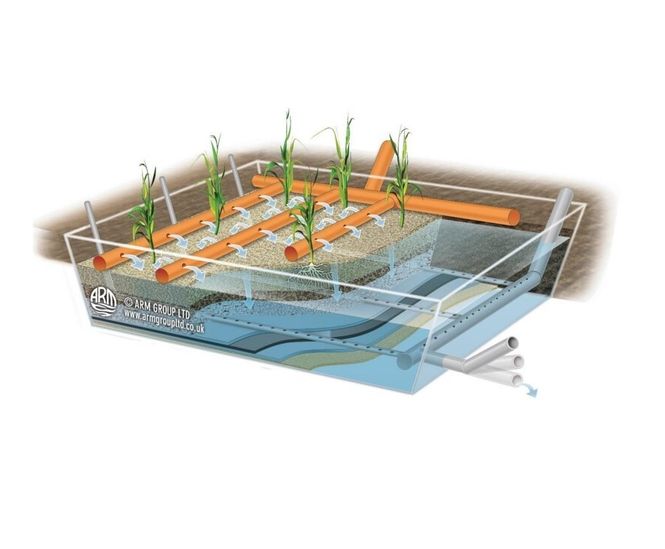
Wastewater containing dissolved phosphorus is evenly distributed to the bed to ensure consistent performance.
The wastewater comes into contact with the reactive media, and the phosphorus within the water reacts with the media to form a physical compound; this process is known as adsorption. This compound stays attached to the media.
As the now-treated water moves through the system, the crystallised phosphorus remains behind; this can now be removed or reused if possible.
The media will need treatment periodically to remove the adsorbed phosphorus. This is done by adding chemicals into the bed. Depending on how intensively the bed is used, a replacement will be needed.
Advantages of using ARMPhos©
High efficiency and longevity: ARMPhos© specifically targets phosphorus, extending system life by reducing overall workload.
Lower operational costs: The media is more cost-effective to treat and replace than metal salts, reducing chemical use and minimising sludge production and associated storage and treatment costs.
Flexibility: ARMPhos© can be easily retrofitted into existing wastewater systems to reduce phosphorus removal costs.
Resource recovery: Phosphorus can be recovered for environmentally-safe disposal or reuse, supporting the circular economy.
Sustainability: Effective phosphorus treatment protects local water sources and biodiversity by preventing oxygen loss. These systems minimise secondary waste production, besides the phosphorus itself.
ARM Ltd provides dependable, eco-friendly wastewater management, offering free initial proposals and drawing on over 35 years of expertise in reedbed systems.