

- Product name
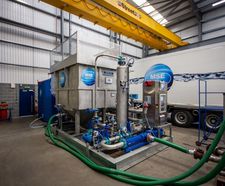
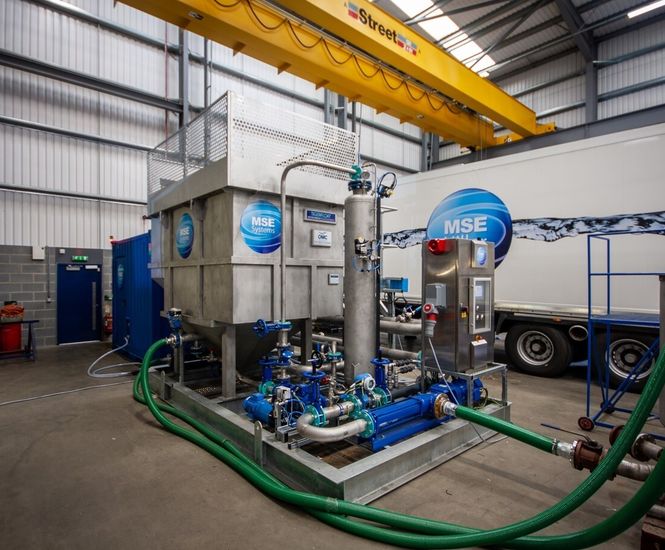
- Skid mounted DAF unit
- Air flotation
- Dissolved air flotation
- Media handled
- Oil-water emulsions
- Oil-water mixtures
- Potable water
- Process liquids
- Sludge / slurry / sewage
- Wastewater / effluent
- For the removal of
- Fats
- Fine suspended solids
- Grease
- Oil
- Capacity (m3/h)
- 30, 20, 10, 5
A skid-mounted dissolved air flotation (DAF) unit with a capacity of up to 30m3/hr is available for short- or long-term hire from MSE Systems. 5, 10 and 20m3/hr units are also available.
The system
In addition to the DAF unit itself, the system includes a self-contained containerised chemical dosing unit. It provides the facility for fully automatic, flow-proportional chemical pre-treatment, such as pH correction using alkali and acid, coagulant, emulsion polymer make-up and dosing.
Applications
DAF is traditionally used as an effective pre-treatment within many industries, such as abattoir, brewing, dairy, food manufacturing, vegetable oil processing, etc. DAF units are used as a continuous wastewater treatment process for the separation of suspended solids, colloidal particles, proteins, oils, fats and grease emulsions.
Hire units have been designed for companies requiring a response to more stringent discharge requirements, increased seasonal loads on existing plants, and general production load increases on existing treatment plant.
How DAF units work
Pre-screened wastewater is first pre-conditioned using a pre-selected coagulant and polymer combination, at an optimum pH condition, to generate large flocs of contaminants within the wastewater. The flocs formed float, rather than settle, with the addition of air in the form of micro-bubbles.
The DAF unit clarifies the wastewater by dissolving air under pressure and then releasing the air at atmospheric pressure. This generates a constant stream of micro-bubbles within the flotation tank, which attach to the pre-flocculated particle contaminants, and lift them to the top of the DAF tank where a thin sludge blanket collects on the surface. The sludge is removed using a paddle scraper mechanism into a hopper section within the tank.
The DAF sludge is removed and can be further dewatered using a centrifuge to reduce volume, thereby reducing sludge disposal costs and traffic on and off site. It also has the added benefit of reducing the associated carbon emissions.