

- Sector
- Utilities
Sulzer technology is playing a key role in an innovative bio-power scheme in the Netherlands
The Rivierenland Water Authority is investing in new infrastructure to improve the performance of its wastewater treatment systems while also reducing its impact on the environment. The utility is aiming to become energy neutral by 2030, and Sulzer technology is helping it to realise this goal.
The newly-expanded Sleeuwijk wastewater plant serves around 64,000 people and has been designed to optimise the performance as well as efficiency of sewage treatment in western Rivierenland. Consolidating three older wastewater facilities into one, an important part of the rationale for the new treatment plant was the opportunity to install a more efficient sludge digestion facility to produce biogas to supply a power generation unit.
The “Energy Factory” at Sleeuwijk is one of the first facilities of its type to use Ephyra® technology, an innovative approach to sludge digestion that offers greater capacity in a smaller space. Developed by Royal HaskoningDHV, this process breaks down sludge more effectively than conventional reactors, increasing gas production by 20-30%. In addition to the sludge generated on-site, the Sleeuwijk energy factory is also designed to process material shipped in from a number of smaller wastewater treatment plants in the west Rivierenland region.
The Ephyra system uses the plug-flow digestion concept. The reactor vessel at the Energy Factory is divided into three compartments, with sludge moving between the compartments under computer control. The concept allows the different stages of digestion to be optimised separately, maximising the efficiency of the process while reducing dwell time in the tanks to as little as six to eight days.
Sulzer in the mix
In order to work effectively, the Ephyra system relies on efficient mixing of the material in each tank compartment. After searching the market for possible solutions, the main contractor selected Sulzer as a key supplier and technical partner for the project.
Flow through the system is highly complex, impacted both by the performance of the mixers and the effect of the pumps that move material between the tank compartments. Using computational fluid dynamics (CFD) simulations, Sulzer wastewater treatment specialists developed a customised sludge mixing approach that met the project’s requirements for performance and energy efficiency.
Nitrogen neutraliser
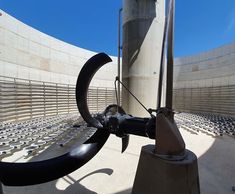
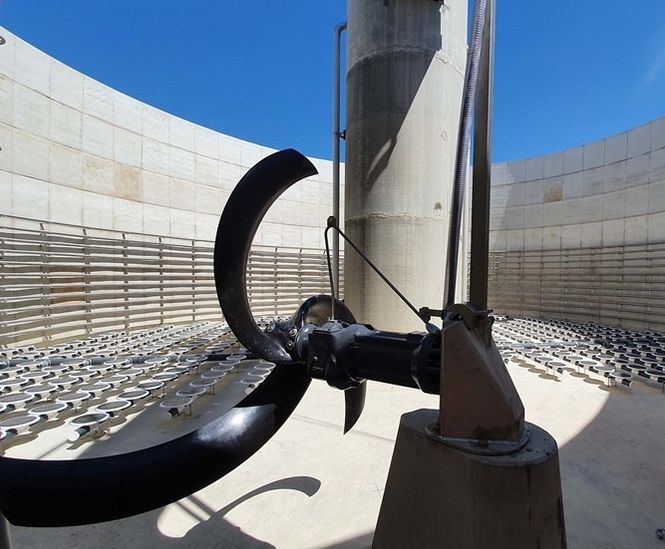
After digestion, the sludge is pumped to another tank for concentration and nitrogen removal using the NAS-ONE anaerobic ammonium oxidation (anammox) process. In this part of the system, air is blown through the sludge to remove excess nitrogen and, once again, the contractor responsible for the work called on Sulzer’s expertise. Compressed air for this process is generated by two highly efficient HST 2500 turbocompressors, and enters the bottom of the tank through 480 DDS PRK 300 disc diffusers, arranged in three banks. One of Sulzer’s floor-standing flow boosters, the XSB 2232 LX, further ensures efficient mixing of air and sludge in the NAS-ONE system.
Elsewhere on the site, two XFP submersible pumps were installed in a sewerage pumping station and two others are responsible for pumping effluent to a buffer tank, from where it is transferred to the heat pump by one of Sulzer’s SNS pumps.