


- Product name
- Biopebble
- Applications
- Process water
- Wastewater
- Filter material
- Polypropylene
Biopebble filter media is optimised for efficient biological wastewater treatment in municipal and industrial treatment processes, and for land-based aquaculture facilities and recirculating aquaculture systems (RAS).
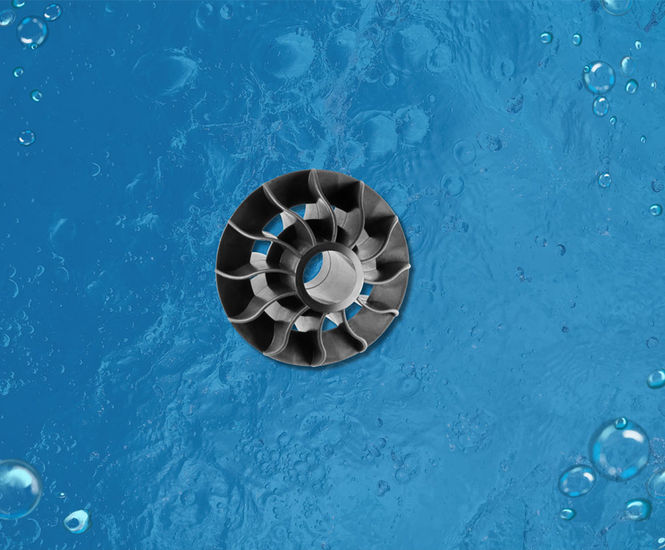
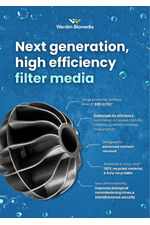
The spherical shape significantly improves media efficiency, by improving media mobility and therefore reducing the aeration energy consumption. Biopebble is designed to provide enhanced nitrogen and ammonia removal.
It is manufactured in the UK from high quality plastic, with options made from virgin or 100% recycled polypropylene – and is fully recyclable at end of life.
It is a durable and rugged media, with density close to water, making it ideal for MBBR applications. The large surface area (500 m²/m³) allows for optimum biofilm attachment, which promotes the generation of healthy and thin biofilms, improving resistance to shock loads, as well as increasing wastewater treatment capacity and reducing the required tank volume for wastewater treatment.
Key benefits
Reduces aeration energy requirements
Improves biological commissioning times
Improves process security
Allows high biomass retention
Increases wastewater treatment capacity
Reduces the required tank volume for wastewater treatment
Promotes the generation of healthy and thin biofilms
Generate biofilms resistant to shock loads
Key features
Spherical design optimised for efficiency
Available in virgin HDPE or 100% recycled PP
Designed for enhanced nutrient removal
Large surface area (500m²/m³)
High voidage (81%)
Durable and rugged design
Expected service life 30+ years
Fully recyclable
Applications
Wastewater – MBBR, municipal and industrial treatment processes
Aquaculture – recirculating aquaculture systems (RAS)
Technical information
Material: recycled PP
Protected surface area: 500m² / m³
Voidage: 81%
Specific gravity: 0.92 ± 0.02
Dimensions: 23 x 17.70mm ± 1.5mm
Weight (dry): ~126kg / m³
Flow direction: non-specific
Pieces / m³: 142,535
Material: virgin HDPE
Protected surface area: 500m² / m³
Voidage: 81%
Specific gravity: 0.96 ± 0.02
Dimensions: 23 x 17.70mm ± 1.5mm
Weight (dry): ~129 kg / m³
Flow direction: non-specific
Pieces / m³: 142,535
Research and development at Cranfield University
The media design and geometry is based on a 3-year research partnership with Cranfield University. Cranfield has a global reputation for its research in the science, engineering and management of water, and has driven innovation in the water sector for over 40 years.
The research was part of a Knowledge Transfer Partnership (KTP) programme, partially funded by Innovate UK. The partnership between Cranfield University and Warden allowed for the development of a novel media.
Here we demonstrated that a spherical media shape was far superior to standard industrial tubular-shaped biocarriers (TSBs), which need high levels of energy input to aerate the system. The spherical media reduced the energy input required in the effluent treatment system, since the media require less energy to be agitated in solution.