

- Sector
- Utilities
- Project location
- East Midlands
- Client
- Severn Trent Water
- Products used
- AnoxKaldnes™
Overview
Veolia worked with Severn Trent Water to help meet tightened permit requirements imposed by the Water Framework Directive (WFD) and address the challenges associated with population growth.
By introducing MBBR systems to the site, Severn Trent Water has reduced the ammonia and phosphorus levels in the final effluent, improving its ecological condition and protecting the water quality of the local river.
Requirement
One of Britain’s largest water providers, Severn Trent Water, undertook an infrastructure overhaul to accommodate increasing population demands and regulation changes set by WFD. Located in Clowne, Derbyshire, the site was required to tighten its permits to reduce the total phosphorus amount from 1 to 0.2mg/l and ammonia from 5 to 4 mg/l, to decrease the risk of environmental harm; at a time when it was also experiencing a significant increase in wastewater loads.
Due to the site’s constrained footprint, there was limited construction space available. Additionally, 33kW overhead power lines ran across the site, which meant that tight controls and restrictions were in place surrounding lifting operations.
Solution
Following a competitive bid process, Veolia was selected as the framework supplier for the project to provide a bespoke solution that would comply with the strict requirements and operate within the limited space available.
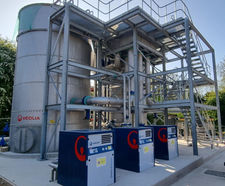
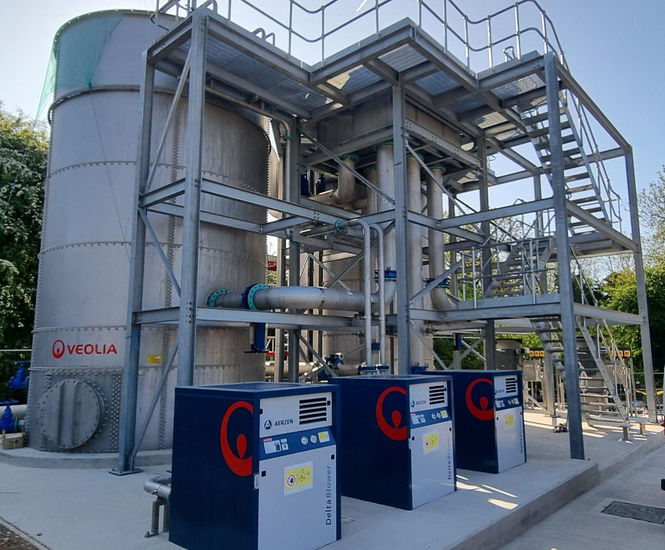
Veolia installed, tested and commissioned two AnoxKaldnes™ Moving Bed Biofilm Reactor (MBBR) systems to reduce Severn Trent Water’s pollutants, designed with a smaller base and taller height to fit onto the custom-built paving slabs, which were also implemented at the site.
MBBR systems are an aerobic treatment method that use active biofilm carriers with large surface areas to grow bacteria in optimal culture conditions. Using aeration, the carriers are constantly kept in motion within the tanks, allowing the bacteria to break down organic material in the wastewater, such as ammonia and phosphorus. Due to their large surface area, the carriers in the systems can treat a high quantity of wastewater using a very small footprint, which was ideal for this application.
Result
As MBBR is a stand-alone system, there was no further need for sludge recirculation at the site, leaving only surplus biomass to be removed through the downstream separation technology.
Moving forward, Veolia will also supply the company with a Performance Support Package, which will provide the operators at Severn Trent Water with the reassurance of having support from the Veolia MBBR experts during the initial 12 months of operation, offering a smooth transition and soft landing.
Comments
"Working with Veolia on this project was a great experience.The MBBR system that was installed has been working extremely well, reducing our ammonia and phosphorus levels in the final effluent, helping to protect the river water quality in the local area. Furthermore, the system will also provide additional treatment capacity to accommodate any further increases in population at Clowne over the coming decades."
– Stephen Hinds, Lead Project Manager, Severn Trent Water
"So far, we have received brilliant feedback from the team at Severn Trent Water and we look forward to working with them again in the future. Not only were we able to design and install a compact alternating flow MBBR for a constrained space, but we were also able to deliver it six weeks ahead of schedule – which ensured quicker results for the company.
– Paul Cooper, Business Development Manager, Veolia