

- Primary media
- Industrial effluents
- Sewage
- Sludge
- Wastewater
- System type
- Engineered systems
- Process characteristics
- Aerobic
- Technologies
- Biological aerated filters
- Integrated fixed film activated sludge system
- Membrane bioreactors
- Submerged aerated filters
- Trickling biofilters
- Installation
- Above ground
- Underground
- Availability
- For sale
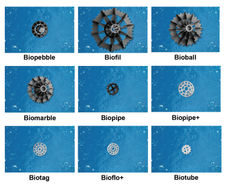
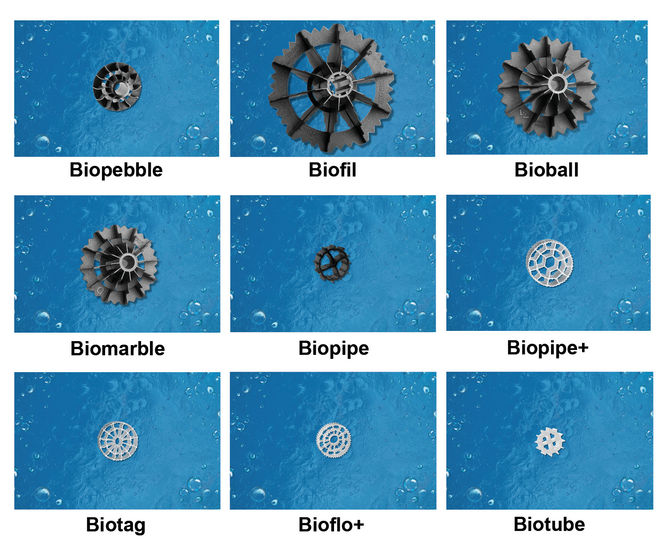
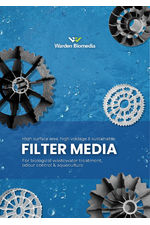
Warden Biomedia filter products (like Biopebble, Bioball 220, Biomarble 310 and Bioflow 800) are high-surface-area plastic media designed to host bacteria for water treatment.
Key aspects of Warden Biomedia
Purpose: Used for biological treatment to remove BOD and ammonia in wastewater, aquaculture, and odour control systems.
Structure: designed with internal fins and large openings to maximise surface area for bacterial growth while preventing clogging.
Material: made from durable recycled or virgin polypropylene (PP) or high-density polyethylene (HDPE), with a lifespan of 20+ years.
Applications: used for trickling filters, submerged aerated filters (SAF), Integrated fixed film activated sludge (IFAS), moving bed biofilm reactors (MBBR), Recirculating Aquaculture Ssytems (RAS) and Bioscrubbers for industrial odour control.
The media is designed to be a permanent, non-clogging alternative to traditional materials like gravel or slag.
Trickling filters (TF)
The media used in trickling filters needs a high surface area but must have a sufficiently open structure not to restrict the natural draft air flow. Traditional filters used blast furnace slag but modern plastic media like Biofil and Bioball provide a much higher surface area per unit volume of media with a low air side pressure drop. This makes these media ideal for replacing old media and uprating existing filters. Selecting the right media will also enhance nitrification by providing a protected area for the growth of nitrifying bacteria
Advantages of Warden Biomedia
Easy replacement of old or damaged media
Improved performance
Reduced “snails problems”
High resistance to erosion
Submerged Aerated Filter (SAF)
Submerged Aerated Filters consists of a series of cells containing buoyant media retained by a screen with air distribution fed from a blower. Because there is no limitation on air flow through the media, it is possible to use media with higher surface area per unit volume than in trickling filters.
Bioball and Biomarble media have proved highly efficient in SAFs.
The media can be selected to provide a protected area for nitrifying and denitrifying bacteria and similar species.
Advantages of Warden Biomedia
Buoyant media
High removal efficiencies
Maximised surface area per unit volume
High organic loadings
IFAS
Integrated fixed film activated sludge (IFAS) process combines biofilm technology and the conventional activated sludge (AS) treatment. IFAS technology is compact, cost effective and retains high biomass concentration in the reactor.
This process uses suspended a suspended buoyant media, usually made of polypropylene (PP) or high density polyethylene (HDPE) with density close to water density (to allow the media to mix with the wastewater).
The plastic media is mixed with the wastewater and kept suspended by the help of mechanical or aeration systems.
Warden Biomedia high surface area filter media allows higher biomass retention within the IFAS process, thus increasing the process performance efficiency to remove pollutants.
A diverse range of applications can be offered by IFAS technology such as, single stage for aerobic treatment or combined with AS processes, and can promote nitrification and denitrification. It uses either fine or coarse bubble diffusers to provide complete aeration basin mixing, coupled with enhanced oxygen transfer.
Small sized media with high surface area such as Biopebble, Biopipe+, Biotag, and Bioflo+, available in polypropylene or high density polyethylene, have a proven IFAS track record.
Advantages of Warden Biomedia
High surface area to increase SRT and biomass concentration for improved BOD5 removal and nitrification (>80%)
Large open area to prevent media blockage by fast-growing aerobic heterotrophic bio?lms under high load conditions
Improved oxygen mass transfer efficiency to reduce energy consumption and carbon footprint
Cost effective retrofitting into existing plant to upgrade effluent quality and increase treatment capacity
Durability and rugged with density close to water
Decreased biofilm shear to minimise biomass detachment
Low sensitivity to shock loads and temperature changes
Flexibility for different IFAS configurations to achieve high quality effluent
Moving Bed Biofilm Reactor (MBBR)
In moving bed biofilm reactors the buoyant media is free to move within an aerated reaction chamber.
The MBBR integrated fixed film activated sludge (IFAS) is essentially an activated sludge suspended growth process but with the biomass fixed to the media. It can perform all the same process variations such as nitrification, denitrification and biological phosphorus removal but with a higher biomass concentration which means higher organic loadings and smaller footprint.
Media can be easily retrofitted into existing activated sludge plants for flow and load uprates.
Small sized media with high surface area such as Biopebble, Biopipe 600, Biopipe+, Biotag, and Bioflo+, available in polypropylene or high density polyethylene, have a proven MBBR track record.
Advantages of Warden Biomedia
High surface area for biofilm attachment
Increased treatment capacity
Higher biomass concentration
Easy conversion of activated sludge to IFAS
RAS
Metabolites excreted by fish and other aquatic stock contribute to the carbonaceous biological oxygen demand (BOD) and the ammonia concentration of the circulating water. For prawns, for example, in order to ensure healthy stock the BOD should be less than 3.0mg/l and ammoniacal nitrogen below 1.0 mg/l – so treating the recirculating water to remove these contaminants is crucial.
Removal of BOD and ammonia can be achieved effectively using aerobic moving bed biofilm reactor (MBBR) technology, which combines the oxidation of carbonaceous BOD into carbon dioxide with nitrification to convert ammonia into nitrate. The process utilises bacteria grown on the surface of media, which use the contaminants in the water as a food source, forming a deposit on the media surface, called a biofilm, which removes the contaminants. Warden’s filter media offer large protected surface area, providing a range of micro-environments conducive to the growth of different bacteria to ensure high biomass attachment and efficient removal of both BOD and ammonia.
The high surface area increases the overall biomass concentration, therefore minimising the required aeration tank volume, and the large openings allow for the wastewater to freely pass through the media helping to maintain a healthy and thin biofilm.
Small sized media with high surface area such as Biopipe 600, Bioflo+ 800 and Biotube 100 available in polypropylene or high density polyethylene, have a proven MBBR track record.
Advantages of Warden Biomedia
Low BOD and ammonia residuals
Smaller process footprint
Increased treatment capacity
Increased loading rates
Easy retrofit existing treatment plants
Simple to operate