

- Features
- Automatic
- Fixed / mobile
- Fixed
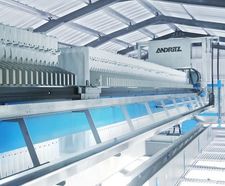
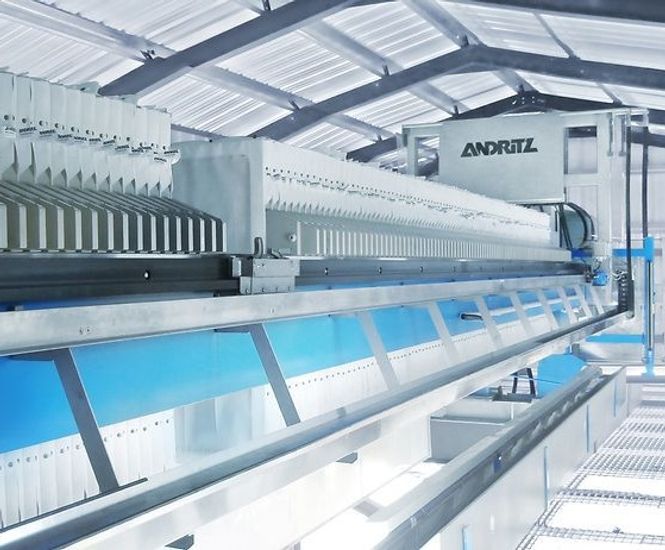
ANDRITZ sidebar and overhead filter presses are industrial filtration systems made for solid-liquid separation in a wide range of sectors. Designed for efficiency and flexibility, these filter presses are suitable for laboratory, standard, and heavy-duty use. Variations include chamber, membrane, and heated filter presses, with options for manual or fully automated operation.
Industrial filter press system for solid-liquid separation
Customisable with chamber, membrane, and heated press types
Manual to fully automatic operation with Metris addIQ control system
Adaptable to changing process parameters and regulations
Low power consumption and straightforward operation
Upgradable with modules such as safety guards, splash guards, and mobile units
Suitable for hazardous, food, and pharmaceutical applications
Applications
Food and beverage processing
Mining and minerals
Chemicals and pharmaceuticals
Industrial wastewater and sludge treatment
Solid waste and biomass processing
Options and variations
Operation: Manual, semi-automatic, or fully automatic
Materials: Stainless steel cladding, rubber lining, PP coating
Mobility: Fixed or mobile units
Add-ons: Safety & splash guards, scraper, vibrating device, raised press frame, second feed inlet, second filtrate outlet, various feed port positions
Performance
High separation efficiency with up to 100% separation
Low power consumption
Post-treatment filtrate capability
Maintenance
Easy operation and low training requirements
Product accreditations
ATEX and GMP compliance
Press Types
Type |
|
|---|---|
Chamber |
Robust, minimal peripheral equipment; 6, 15, or 30 bar; lower CAPEX/OPEX |
Membrane |
Flexible membrane compresses cake post-filtration; up to 30+ bar inflation |
Plate & Frame (Sheet) |
Quick cloth change; pre-coat filtration; up to 6 bar; suited to beverage |
Heated |
For temperature-sensitive or viscous media |
Intelligent Filter Press / IIoT
Dynamic squeezing time and fill level optimisation
Real-time batch fault detection (filtrate quality, pressure anomalies)
Remote plant management
Coordinates with downstream equipment (dryers, mixers, extruders)